





Frontend
Development Services

What is Frontend Development ?
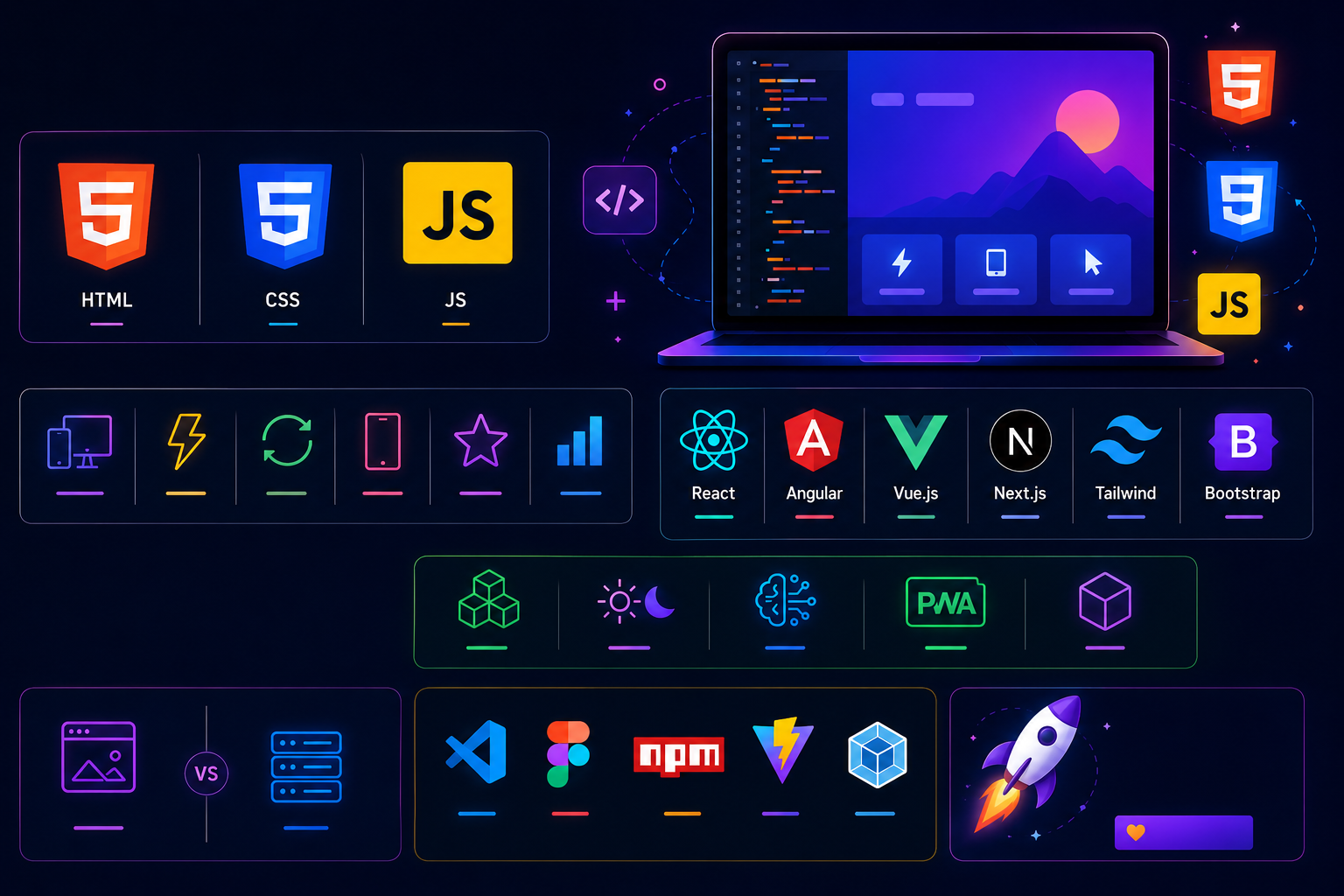
Frontend development is the art and science of building the part of a website or
application that users see and interact with. It covers everything visual
layouts, icons, typography, buttons, animations, and overall interaction
behavior. A frontend developer works to make digital interfaces feel smooth,
load fast, respond instantly, and adapt beautifully on every screen size. It is
not just about making things look good, but also making them work well, feel
intuitive, and remain accessible to every user.

Frontend Design & UX Benefits
- Responsive Web Design Performance Optimization
- Accessibility Best Practices SEO Best Practices
Better User Experience
A strong frontend design ensures users can navigate without confusion. Proper spacing, clear font structure, aligned elements, and thoughtful placement of interactive components create an interface that feels easy to use and quick to understand.
Fast & Smooth Performance
Frontend optimization improves the speed at which content loads and visuals render. Image compression, light animations, and smart code structuring help deliver a stable experience without lag or delay.
Works on All Devices
Frontend design today is flexible by nature. Whether the user is on a mobile phone, tablet, laptop, or desktop the layout adjusts itself without breaking, making navigation touch-friendly and visually consistent.
Core Frontend Design Principles
User-Centered UI/UX
• Screens
should feel logical
• Layout must be clean and aligned
• Font sizes must show clear hierarchy
• Buttons must be easy to spot and click
Responsive Layout
• Uses grid and flex-based structures
• Elements resize as per screen
• Visuals remain consistent on every resolution
Accessibility
• Colors must have good contrast
• Text should be readable for everyone
• Supports keyboard navigation and screen readers
Performance Optimization
• Images must be compressed
• Animations should stay lightweight
• CSS and JS should be minified
SEO-Friendly Structure
• Uses semantic HTML tags
• Follows proper heading sequence
• Every image has alt text
• Code is clean for better crawling
Frequently Asked Questions
Frontend development is building the visual and interactive part of a website or app — including layouts, animations, buttons, and responsive design that users see and interact with.
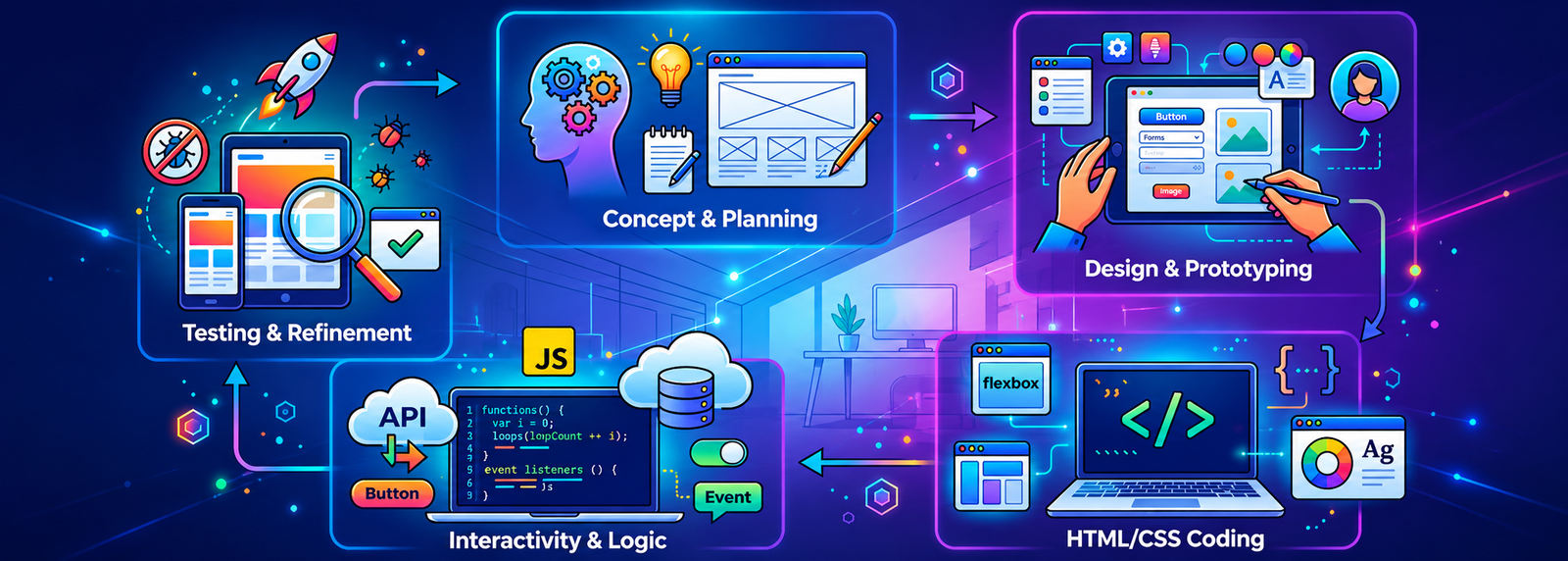
Our frontend services focus on:- 1. Intuitive and engaging user interfaces (UI/UX).
- 2. Pixel-perfect translation of designs into clean, semantic code.
- 3. Interactive features, modern animations, and dynamic elements.
Popular frontend technologies include HTML5, CSS3, JavaScript, React, Vue.js, Bootstrap, and modern CSS frameworks for responsive and accessible design.
We employ a cutting-edge tech stack:- 1. React, Next.js, Vue.js, and Angular for powerful single-page apps.
- 2. HTML5, Semantic CSS3, Sass/SCSS, and Tailwind CSS.
- 3. ES6+ JavaScript, TypeScript, and modern bundlers (Webpack, Vite).
Responsive design ensures the website adapts to all screen sizes — mobile, tablet, and desktop — providing a consistent and user-friendly experience on every device.
Key benefits of responsive frontend design:- 1. High conversion rates and improved user engagement across devices.
- 2. Higher search engine ranking (Google favors mobile-first responsiveness).
- 3. Low maintenance overhead compared to developing separate mobile/desktop versions.
Frontend development affects SEO through semantic HTML, page load speed, accessibility, structured headings, and image optimization — all of which impact search rankings.
We optimize your frontend for search engines via:- 1. Correct header tags (H1-H6) and structured SEO-friendly navigation markup.
- 2. Blazing fast load times utilizing code splitting, lazy loading, and asset minification.
- 3. Accessible structure complying with WCAG guidelines for universal readability.
Frontend handles what users see — UI, animations, responsiveness. Backend handles server logic, databases, and APIs. Both work together to create complete web applications.
How they coordinate to build a system:- 1. The frontend gathers user input and requests data from the backend.
- 2. The backend authenticates credentials, queries databases, and processes core business logic.
- 3. The backend returns data (typically in JSON format), and the frontend renders it beautifully.